
Bathroom leaks are more than a nuisance. In Chennai’s humid, coastal climate, small cracks, failed grout lines, or plumbing penetrations quickly become damp walls, peeling paint, fungus growth, and seepage to the neighbor below. If your tiles look fine but the wall behind is damp—or your downstairs flat keeps complaining after every shower—it’s time for professional bathroom proofing.
Dr. Terrace Waterproofing brings proven, building-science methods to bathroom waterproofing in Chennai. From pin-point leak diagnosis to flood testing and a clean finish, we deliver long-lasting results—backed by a service warranty—without messy guesswork.
Why Bathroom Proofing Matters More in Chennai
- Monsoon & Humidity: Extended wet seasons and high moisture accelerate grout failure, fungal growth, and capillary movement of water into walls and slabs.
- Older Buildings & Sunken Slabs: Many Chennai apartments feature sunken bathrooms; poor slope or degraded waterproofing allows water to sit and seep.
- Salt-Laden Air: Coastal chlorides corrode embedded steel over time if water ingress is ignored, weakening the slab.
- Shared Walls & Ceilings: Seepage often shows up in your neighbor’s ceiling; fast, professional treatment preserves relationships—and property value.
Signs You Need Bathroom Waterproofing
- Musty odor, persistent damp patches, or efflorescence (white salts) on walls/ceilings
- Peeling paint, swollen wood frames, rusting door jambs
- Hairline cracks on tile grout; gaps at drain collars or pipe penetrations
- Water stains appearing in the flat below—especially near the toilet or shower area
- Wetness that returns a few days after repainting or regrouting
Root Causes of Bathroom Leaks
-
Failed Grout & Sealant: Cement grout is not waterproof; it shrinks and cracks over time. Silicone around fixtures can detach.
-
Insufficient Slope to Drain: Standing water finds weak spots.
-
Cracked Screed or Slab: Movement cracks transmit water.
-
Poor Detailing: Junctions at wall–floor joints, pipe collars, and thresholds are common entry points.
-
Aging/No Waterproofing Layer: Many bathrooms were tiled without a flexible, continuous membrane beneath.
Our Bathroom Proofing Process (Step-by-Step)
We tailor the method after inspection. Based on condition, you can choose Tile-Over (No Removal) or Full System (With Tile Removal). Either way, we follow a rigorous, best-practice workflow:
-
Site Inspection & Moisture Diagnosis
Visual checks, tapping, and moisture-meter readings help locate sources precisely (wall–floor junctions, pipe penetrations, shower splash zone, WC area). -
Leak Source Isolation
We test floor trap, WC outlet, shower lines, and concealed plumbing to ensure we address the cause—not just the symptoms. -
Surface Preparation
Tile-Over Option: Deep cleaning, degreasing, removal of loose grout, opening hairline cracks, and roughening the surface for superior bond.
-
Full System Option: Careful tile removal where needed, lifting the old screed if it’s delaminated, and exposing the slab for thorough treatment.
-
Crack & Joint Treatment
Chasing cracks and filling with polymer-modified repair mortar; adding flexible fillets at wall–floor junctions to accommodate movement. -
Priming
Application of a compatible primer/SBR to ensure strong adhesion of subsequent layers. -
Waterproofing Membrane Application
Cementitious Acrylic / Flexible Polymer Membrane applied in multiple coats (with recommended coverage rates), with fiberglass mesh reinforcement over junctions and larger areas.
-
Around drain collars and pipe penetrations, we add extra detailing collars and sealants.
-
Protective Screed & Slope Correction (Full System)
We reinstate slope (typ. 1:100 to 1:80) toward the drain to avoid standing water. -
Tile Laying & Adhesives (Full System)
Use of polymer-modified tile adhesive; joints finished with epoxy grout (water- and stain-resistant). -
Sealant & Sanitaryware Interfaces
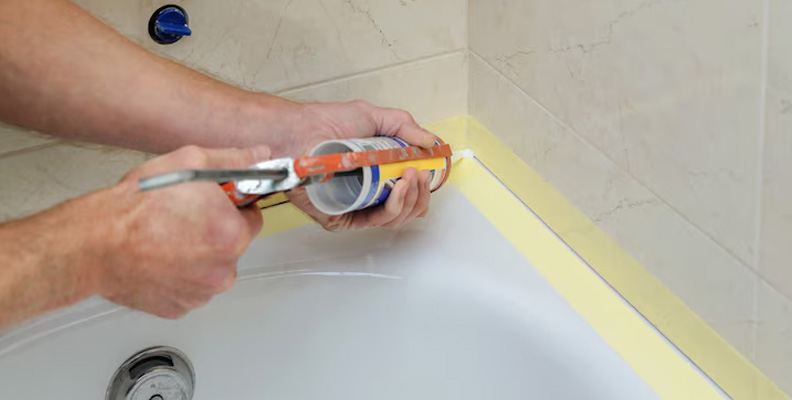
High-grade neutral cure silicone around fixtures, shower glass channels, and expansion joints. -
48-Hour Flood Test
We plug the drain and fill the area to verify zero leakage before handover. -
Final Clean-Up & Handover
Documentation of materials used, care instructions, and warranty.
Materials & Standards We Follow
- Flexible, crack-bridging membranes suitable for wet areas (bathrooms, sunken portions, balconies)
- Polymer-modified repair mortars for crack filling and fillets
- Epoxy or performance grout for joints
- Neutral cure silicone at perimeters and penetrations
- Integral waterproofing compounds for screeds/mortars (where applicable)
- Slope and detailing as per good building practice for wet areas
What You Get with Dr. Terrace Waterproofing
- Zero-Leak Approach: Diagnose first, then solve—no shortcuts.
- Clean Execution: Dust control, daily housekeeping, and occupant-safe practices.
- Transparent Communication: Before/after photos, progress updates, and post-care instructions.
- Warranty: Up to 5-year service warranty depending on scope and package.
- Chennai Specialists: Experience across apartments, independent houses, and commercial spaces.
Service Areas in Chennai
We cover Nungambakkam, Anna Nagar, T. Nagar, Adyar, Velachery, Tambaram, Porur, Ambattur, Avadi, OMR, ECR, Perambur, KK Nagar, Mylapore, Pallikaranai, and surrounding suburbs. If you’re unsure, send us your location—our team will confirm availability.
Timelines & Pricing (Indicative)
- Tile-Over Refurbishment: Typically 1–2 days depending on size and drying time.
- Full System (Tile Removal & Re-lay): Typically 3–5 days, factoring curing and flood testing.
- Indicative Costs (vary by area, condition, and material selection):
- Tile-Over Waterproofing: ~₹180–₹350 per sq ft*
- Full System (with tile removal & epoxy grout): ~₹450–₹900 per sq ft*
- *Final quotation after site inspection; GST as applicable.
Maintenance Tips for a Leak-Free Bathroom
- Wipe down shower walls/floors to reduce standing water.
- Reseal silicone perimeters every 2–3 years.
- Address loose tiles or hollow sounds immediately.
- Avoid harsh acid cleaners; they erode grout and seals.
- Keep floor traps clean; ensure water flows freely to the drain.
Mini Case Study (Chennai Apartment)
Issue: Downstairs seepage from shower zone despite recent regrouting.
Findings: Inadequate slope and missing membrane at the wall–floor junction.
Solution: Full system approach for shower bay—crack repair, flexible membrane with mesh reinforcement, slope correction, epoxy grouting, and 48-hour flood test.
Result: Zero seepage verified; clean finish; tenant resumed normal use after curing.
FAQs – Bathroom Waterproofing in Chennai
1) Is regrouting enough to stop leaks?
Regrouting is cosmetic and may not be waterproof. If membranes or junctions have failed, a proper waterproofing system is required.
2) Do you always remove tiles?
Not always. We offer Tile-Over systems when the substrate is sound. For severe substrate failure or slope issues, we recommend Full System with removal.
3) How long does it last?
With proper use and maintenance, a professionally applied system can last many years. We provide up to 5-year service warranty based on the package.
4) Will work cause heavy dust and noise?
We use dust control and careful demolition methods. Tile removal is noisier; tile-over is quieter and quicker.
5) Can we use the bathroom during work?
You’ll need to keep the area off-limits during coating, curing, and flood testing. We plan schedules to minimize disruption.
6) Will this stop seepage to the flat below?
Yes—when the source is within your wet area and the membrane is applied correctly with proper detailing and flood-tested.
7) What is a flood test?
We plug the drain and fill the area with water for up to 48 hours to confirm zero leakage before handover.
8) Do you fix plumbing leaks too?
We coordinate basic plumbing rectifications related to the bathroom proofing scope. Concealed line replacements can be arranged where necessary.
9) Is epoxy grout mandatory?
Not mandatory, but highly recommended. It’s more water- and stain-resistant than cement grout, ideal for showers.
10) How soon after completion can we use the bathroom?
After curing and flood testing—typically 24–72 hours from the last coat or grout application, depending on materials and ventilation.
11) What about mold and fungus?
We clean and treat affected surfaces. Our coatings and epoxy grout reduce moisture absorption, helping prevent regrowth.
12) Payment & GST?
We provide a formal estimate with scope, materials, warranty, timelines, and GST. Digital payments and invoicing are supported.
Conclusion – Choose a System That Truly Stops Leaks
Bathroom proofing isn’t guesswork. It’s careful diagnosis, correct materials, and clean execution. With Dr. Terrace Waterproofing, you get a purpose-built system for Chennai’s climate—from crack treatment and flexible membranes to epoxy grouting and flood testing. Ready for a dry, healthy bathroom?
Call Dr. Terrace Waterproofing (Chennai) to book a free site visit and get a detailed, no-obligation quotation.